

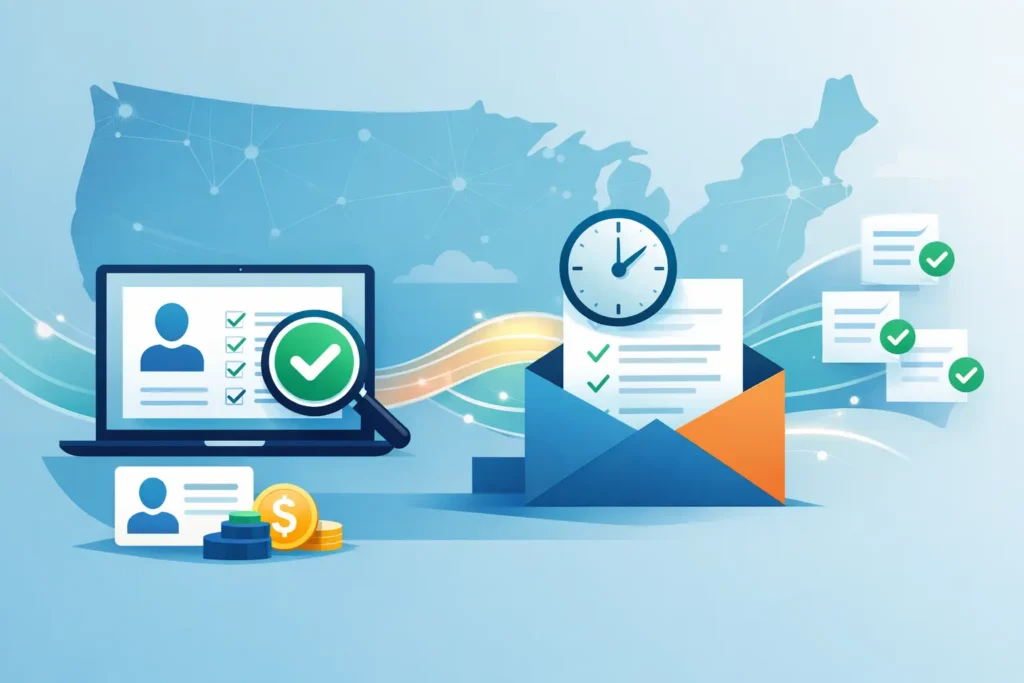
A real time TIN API changes the point at which vendor tax data is checked. Instead of discovering a name and TIN mismatch after a 1099 file is built, your system can flag the record when a vendor is onboarded, a contractor submits a W-9, or an accounts payable profile is updated.
That timing matters. Incorrect payee data can lead to rejected workflows, B-Notices, backup withholding exposure, filing corrections, delayed payments, and avoidable work for tax and finance teams. For organizations processing hundreds or thousands of vendor records, manual review is not a dependable control. Verification needs to happen inside the workflow where the data enters the business.
What a Real Time TIN API Should Do
A real time TIN API allows your application, ERP, procurement portal, payroll platform, or vendor onboarding workflow to submit a taxpayer identification number and associated business or individual name for immediate evaluation. The response can be used to determine whether a record is complete, whether the supplied identity data appears consistent, and whether the record should proceed, be held for review, or require a corrected W-9.
The value is not simply speed. It is the ability to apply the same verification standard every time a payee record is created or changed. A staff member should not need to remember to open a separate tool, copy a number into a search field, interpret a result, and document the decision. The system should present the result where the decision is being made.
For compliance teams, the API response should support clear operational outcomes. A successful response may allow the payee record to move forward. A mismatch may route the record to a review queue. An incomplete request should return a usable error that tells the calling system what must be corrected before another attempt.
Why Real-Time Validation Reduces 1099 Risk
Year-end is the worst time to find tax identity problems. By then, vendor records may have been used for months, payments may already be scheduled, and the person who collected the original tax form may no longer be available. A mismatch discovered during 1099 preparation becomes a compressed deadline, often followed by outreach, record cleanup, and amended filing work.
Validating earlier gives teams time to resolve discrepancies while the vendor relationship is active. If the legal name on the W-9 does not align with the submitted TIN, the business can request updated documentation before payments and reporting activity accumulate. This is a more controlled process than chasing corrections after an IRS notice arrives.
Real-time checks also improve consistency across decentralized teams. Procurement, finance, legal, tax, and regional business units may all create vendor records. Without a shared validation control, each group can follow a different process. An API places verification rules in the system rather than relying on individual habits.
Real Time TIN API Workflows That Work
The best implementation depends on where your organization receives payee information. A small accounting practice may use the API when a preparer adds a contractor to a client file. An enterprise may call it from a supplier management platform before a vendor profile is activated. Both use cases benefit from immediate results, but their review rules and volumes will differ.
For vendor onboarding, trigger verification after the vendor submits required tax information and before the profile is approved for payment. This prevents unverified records from becoming active vendors by default. If a result requires review, retain the submitted name, TIN status, date, and internal reviewer decision in the vendor record.
For accounts payable, run a new check when a vendor changes its legal name, entity type, tax classification, or TIN. Changes are a common source of reporting errors because teams may assume an existing vendor has already been cleared. A prior match does not validate newly submitted tax details.
For 1099 preparation, use real-time calls to resolve exceptions found in your current payee file, then use batch processing for large-scale cleanup when appropriate. Real-time API access is well suited to individual events. Batch matching is often more efficient when reviewing an entire vendor master file before filing season. These methods complement each other rather than compete.
A practical workflow should define three outcomes: approved, review required, and unable to verify. Do not treat every non-match as proof of fraud. A discrepancy can result from a spelling variation, an entity name change, a transposed digit, or an outdated W-9. The right response is controlled follow-up, not an automatic accusation.
Data Lookup Is Not the Same as IRS TIN Matching
Business data search and IRS TIN matching serve different compliance purposes. A search tool can help locate an EIN, identify an organization, review business information, or compare vendor-supplied details against available records. This is useful during due diligence and can catch obvious issues before tax information reaches your reporting workflow.
IRS TIN matching, when available and properly authorized, is a separate validation process focused on whether the taxpayer name and TIN combination aligns with IRS records for reporting purposes. Teams should not assume that a public business record or EIN lookup alone confirms IRS match status. Likewise, a valid-looking nine-digit number does not prove that it belongs to the named payee.
Use the right control for the risk. Search data can support vendor research and pre-validation. Direct matching supports tax reporting accuracy. For high-volume operations, a platform that combines business intelligence, IRS TIN matching capabilities, and API delivery reduces the gaps created by disconnected tools.
Implementation Details That Protect the Process
A fast integration is only useful if it produces reliable records and protects sensitive data. Start by defining the minimum fields your application must collect. At a minimum, that generally includes the taxpayer name and TIN, entered exactly as supplied on the payee’s tax documentation. Avoid automatically altering legal names before the verification request, since normalization can create avoidable mismatches.
Your integration should also distinguish between validation outcomes and technical failures. A name-TIN mismatch is a business exception that may require a new W-9. A timeout, authentication issue, or malformed request is a system exception that belongs with your technical support process. Combining these categories leads to poor reporting and slow resolution.
Build auditability into the workflow from the start. Record when the verification occurred, the source system, the status returned, the user or automated process that acted on it, and any follow-up documentation. These details help compliance teams explain why a payee was approved, held, or corrected months later.
Access controls matter as well. TINs are sensitive information. Limit API credentials by environment and function, restrict who can view full values, and ensure production logs do not expose unnecessary taxpayer data. Enterprise teams should also establish retention rules that balance operational documentation with data minimization requirements.
Choosing an API Provider for Compliance Operations
Do not select a TIN API solely on the basis of response time. Speed is valuable, but compliance workflows need accurate result handling, clear documentation, dependable availability, and support for both one-off and high-volume validation. Your provider should fit the way your team works during normal onboarding and during the filing-season surge.
Evaluate whether the service supports the distinction between instant search, direct IRS matching, and batch review. Ask how status responses are documented, how exceptions are handled, and whether your team can maintain access controls across multiple users and business units. A tool that works for a single lookup may not provide the operational controls needed by a payroll provider, accounting firm, or enterprise AP department.
EINSearch.io is designed for this compliance-focused model, combining business data search, IRS TIN matching capabilities, real-time API access, and batch processing in one environment. The goal is straightforward: verify payee information before it becomes a filing problem.
The strongest control is the one that runs before a payment record, vendor profile, or 1099 file becomes difficult to correct. Put TIN verification at the point of entry, route exceptions to the right team, and give your organization time to resolve issues while the records are still manageable.