

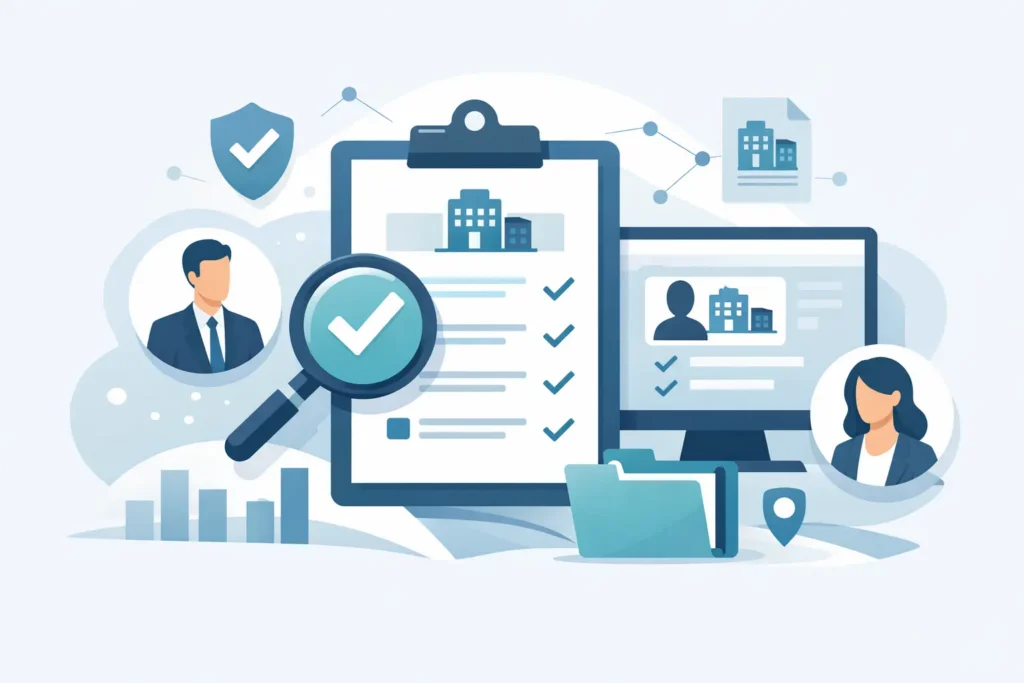
A vendor record can look complete and still fail when it matters most. A legal name may have changed, an EIN may contain a transposed digit, or a contractor may have supplied a business name that does not match IRS records. An EIN verification API gives finance, tax, and compliance teams a way to identify those issues before a payment file, vendor master, or 1099 return creates rework.
For organizations processing dozens, thousands, or millions of payee records, verification cannot depend on manual searches and last-minute outreach. API-based validation moves the check into the workflow where vendor data is created, updated, approved, or prepared for filing. The result is faster exception handling, stronger documentation, and fewer preventable reporting failures.
What an EIN Verification API Must Confirm
An EIN verification API should do more than tell you whether a nine-digit number follows the right format. Formatting can catch obvious entry mistakes, but it cannot confirm whether the taxpayer identification number belongs to the legal entity named in your records.
The central compliance question is whether the TIN and name combination match. This is the same relationship that determines whether a 1099 filing is accepted without a mismatch notice. When a submitted name and TIN do not align with IRS records, the filer may receive a B-Notice and face a cycle of corrections, vendor outreach, backup withholding decisions, and amended reporting.
A useful verification workflow separates three related checks. First, it validates that the EIN is structurally plausible. Second, it uses business data to identify likely entity details, including legal name, trade name, address indicators, and business status where available. Third, when filing-level certainty is required, it confirms the name and TIN through IRS TIN matching.
Those checks serve different purposes. A business data search is valuable for investigating an incomplete vendor profile or resolving a suspected typo. IRS matching is the stronger control when the organization needs to validate reportable payments before filing. Treating a search result as equivalent to an IRS match creates avoidable compliance risk.
Where API Verification Belongs in Your Workflow
The best time to detect a bad tax ID is before it reaches the year-end reporting queue. Most teams benefit from placing verification at more than one control point, because vendor information can change after onboarding.
At onboarding, the API can check a new vendor submission as soon as an accounts payable specialist or supplier enters the legal name and EIN. If the result indicates a mismatch, the record can be routed for correction instead of approved automatically. This prevents unverified payees from entering purchasing and payment systems with a false sense of completeness.
Before payment release, a second check can be appropriate for high-risk vendor types, newly changed bank details, or contractors receiving reportable payments. It depends on the organization’s risk policy and transaction volume. Rechecking every existing vendor before every payment may add unnecessary cost, while never rechecking changed records leaves a clear control gap.
The most common use case is a pre-filing review. Teams can submit all reportable payees through batch processing or an integrated API workflow well ahead of the 1099 deadline. Exceptions are then assigned to the people who can resolve them, with enough time to request a corrected Form W-9 rather than rush through an inaccurate filing.
Build for Match Results, Not Just Pass or Fail
A verification response should create an operational decision, not become another data point buried in a system log. Your integration should capture the original name and TIN submitted, the date and time of the request, the response status, and the source of the result. That record supports internal review when someone asks why a vendor was approved, blocked, or sent back for correction.
A simple pass-or-fail model is often too limited. Strong workflows use distinct statuses such as verified, possible mismatch, invalid format, insufficient input, pending review, and unable to verify. Each status should trigger a defined next step.
For example, an invalid-format response can stop the record immediately and prompt the user to correct the entry. A possible name mismatch may require comparison against the vendor’s W-9, corporate registration, or payment profile. An unable-to-verify response should not automatically mean the payee is invalid. It may indicate incomplete data, a recently formed entity, or a name formatting issue that needs human review.
This distinction matters because overly aggressive blocking can delay legitimate payments. The goal is not to reject vendors indiscriminately. It is to send the right records into the right exception path, with an audit trail that shows the team acted before filing.
Data Quality Determines API Value
An API can only evaluate the information it receives. If your vendor master stores a DBA name in the legal-name field, strips punctuation inconsistently, or combines individual and business taxpayer data in one field, matching accuracy will suffer.
Start with clean field design. Keep the legal name, doing-business-as name, EIN or TIN, address, contact information, entity type, and W-9 collection status separate. Do not rely on free-text notes for core tax identity data. Require users to select or confirm the taxpayer name that appears on the submitted W-9.
Name normalization also deserves attention. Differences involving abbreviations, suffixes, punctuation, spacing, and entity designations can produce exceptions that are not true identity failures. Your workflow should preserve the original submitted value while applying consistent rules for comparison and review. Never overwrite source data merely to force a match result.
For large vendor files, batch processing is often the practical answer. It lets a compliance team review a complete population, prioritize records by payment volume or filing exposure, and work exceptions in a controlled queue. Real-time API validation is better for immediate onboarding decisions. Mature programs usually use both.
Security and Access Controls Are Part of Compliance
EIN and TIN verification involves sensitive business and taxpayer information. The integration should use encrypted transmission, authenticated requests, limited user permissions, and clear retention rules. Teams should also avoid exposing full TINs in dashboards, exports, support tickets, or general-purpose logs.
Role-based access matters in practice. An onboarding specialist may need to see that a record requires correction, while a tax manager needs the details necessary to resolve the mismatch. Engineering teams may need error codes and request identifiers without access to raw taxpayer data. Those boundaries reduce unnecessary exposure and make internal reviews easier.
Enterprise teams should also plan for vendor master changes. If a user edits a legal name, EIN, or tax classification after verification, the system should flag the record for revalidation. A prior match does not remain meaningful when the underlying identity fields change.
Choosing an API Provider for Reporting Workflows
The right provider is not simply the one that returns a result fastest. Look for a service that supports both investigative lookup and compliance-grade validation, clearly distinguishes available data sources, and can handle your volume without forcing manual workarounds.
Evaluate whether the provider supports real-time requests, batch workflows, meaningful response statuses, audit-friendly records, and controls for multiple users. Confirm how the platform handles partial inputs, ambiguous names, retries, and records that require review. These edge cases determine whether an integration helps your team at deadline or creates a larger exception queue.
EINSearch.io combines a broad business data index with direct IRS TIN matching capabilities, giving teams a single environment for vendor research, validation, batch review, and API-driven workflow controls. That combination is useful when your team needs to investigate a record before deciding whether it requires filing-level verification.
Put Verification Before the Deadline Pressure
An EIN verification API is most valuable when it becomes a routine part of vendor governance, not a January emergency project. Start by validating new vendors and changed tax records, then expand to a pre-filing review of your reportable population. Measure mismatch rates, correction turnaround time, and the percentage of vendors verified before payment or filing.
The practical objective is clear: give your team enough time and evidence to correct tax identity issues while they are still manageable. A verified vendor file protects more than a 1099 deadline. It protects the accuracy of the business decisions built on that file.