

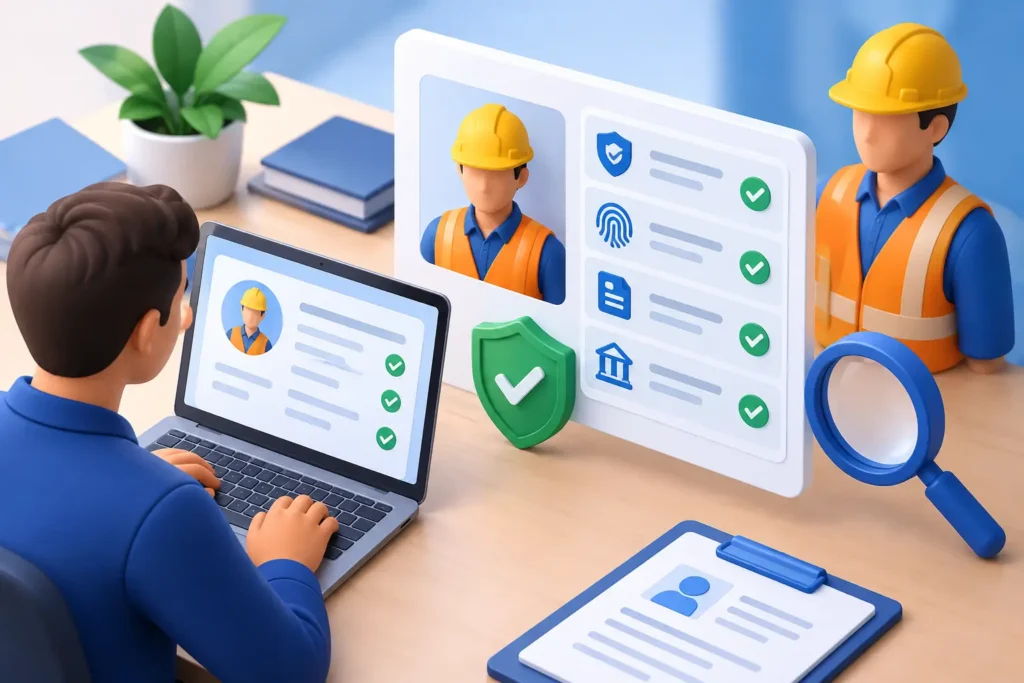
A contractor can submit a polished W-9, a professional invoice, and banking details that look legitimate – then disappear after the first payment. The best fraud checks for contractor onboarding focus on the records that connect a real payee to a valid tax identity, an operating business, and an authorized payment destination. That is how accounts payable and compliance teams prevent bad vendor setup decisions before money moves or a 1099 file is created.
For most organizations, contractor fraud is not one dramatic event. It is a process failure: a name was entered incorrectly, a tax ID was never matched, an email-only request changed bank details, or a rushed approver skipped the normal review. The right controls should catch both deliberate fraud and costly data errors without making legitimate contractors wait days to get started.
Why contractor onboarding creates fraud exposure
Contractor onboarding sits at the intersection of payments, tax reporting, and identity verification. A single bad record can create several problems at once: funds sent to an impostor, duplicate vendor profiles, inaccurate 1099 reporting, B-Notices, payment delays, and a difficult audit trail.
Fraudsters understand where teams are under pressure. A project manager needs a contractor paid quickly. A new accounts team wants to avoid slowing down a revenue-producing relationship. An AP specialist may receive a W-9 and bank instructions in separate emails and assume they belong together. Speed matters, but unverified speed creates an opening.
The goal is not to treat every contractor as suspicious. It is to establish enough independent evidence that the payee record is credible, correctly classified, and controlled before payment approval.
The best fraud checks for contractor onboarding
1. Match the legal name and TIN before the first payment
TIN matching is the core tax identity control. Compare the legal name and taxpayer identification number on the W-9 against a reliable matching source before the contractor enters your payment system. A match confirms that the submitted name-TIN combination is consistent with tax reporting records. A mismatch is not proof of fraud, but it is a stop signal that requires correction or documentation.
This check matters because small differences can have major filing consequences. A business may use a trade name publicly while the IRS recognizes a different legal name. A contractor may provide an outdated entity name after a merger or conversion. In other cases, the mismatch may indicate a fabricated W-9 or a tax ID copied from another business.
Do not override a mismatch simply because the invoice looks legitimate. Ask for a corrected W-9, confirm the legal entity name, and retain the resolution record. That discipline helps stop B-Notices and reduces avoidable 1099 rework.
2. Validate that the business identity is real and internally consistent
A valid TIN match is essential, but it should not be the only check. Review whether the contractor’s company name, address, email domain, phone number, website, and service description tell a consistent story. A company offering commercial electrical work from a generic free email address is not automatically fraudulent, especially for a small operator, but it deserves more review than an established supplier with a verifiable business presence.
Look for conflicting data across the onboarding packet. The legal name on the W-9 should not materially differ from the name on the contract, invoice, certificate of insurance, or bank account documentation without an explanation. The payment recipient should align with the payee entity, or the exception should be formally approved.
For business contractors, an EIN search and business tax ID database can provide a fast first-pass view of known entity information. For higher-risk relationships, supplement that result with state registration review, licensing checks where applicable, and confirmation that the business is authorized to perform the contracted work.
3. Treat bank detail changes as a separate fraud event
Bank-account fraud often occurs after a legitimate contractor has already been onboarded. An attacker compromises an email account, sends updated ACH instructions, and relies on an AP team member to process the change quickly. Because the vendor is already trusted, the change can receive less scrutiny than the original setup.
Require independent verification for every payment-detail change. Use a known phone number from your existing vendor record or a trusted external source, not the number included in the change request. Apply maker-checker approval so the person entering new details cannot also approve them. Place a short payment hold on newly changed accounts when the payment timeline allows.
The most dangerous phrase in this workflow is “please update immediately.” Urgency is not evidence. A controlled callback and approval trail are far less expensive than recovering a fraudulent wire or ACH payment.
4. Screen for duplicate and related-party vendor records
Duplicate vendors can be accidental, but they can also hide duplicate payments or conflicts of interest. Search for close matches across legal name, DBA, TIN, address, phone number, email domain, and bank account. Exact matching alone is not enough. Fraudulent or duplicate profiles often use minor spelling changes, abbreviations, suite-number changes, or a different contact person.
Related-party checks are especially useful when contractors are selected by decentralized departments. If an employee, approver, or project manager has a personal or financial connection to a contractor, the relationship may be legitimate, but it should be disclosed and reviewed. A conflict-of-interest declaration is a simple control that protects both the company and honest employees.
5. Verify the authority behind the submission
A real business can still be impersonated. Confirm that the person supplying the W-9, contract, and payment instructions is authorized to act for the contractor. This is particularly important for larger engagements, changed bank details, international contacts, or requests that bypass normal procurement channels.
Authority verification does not have to be burdensome. Compare the submitter’s email domain to the contractor’s known business domain, confirm the contact through an independently sourced number, and document who approved the setup. For high-dollar or high-risk vendors, request a signed authorization or contact a listed officer or owner through a separate channel.
6. Use risk-based screening rather than one-size-fits-all review
Not every contractor needs the same level of review. A one-time local photographer paid $800 does not present the same exposure as a new construction subcontractor receiving recurring five-figure ACH payments. Build an escalation model around payment amount, payment frequency, access to company systems, industry risk, geographic risk, and unusual payment instructions.
Higher-risk contractors may require additional sanctions, adverse media, licensing, insurance, ownership, or fraud-screening checks based on your industry and internal policy. Financial institutions and regulated businesses may need procedures that support BSA and anti-money laundering obligations. Those controls should be proportionate and documented, not applied randomly.
Build the checks into the workflow, not a spreadsheet
The strongest fraud program is one that happens consistently. If verification depends on an AP clerk remembering five manual searches during a busy payment cycle, records will eventually be missed. Put required checks into the onboarding workflow: no approved W-9, no completed TIN match, no vendor activation. No independently verified bank details, no payment release.
For high-volume teams, batch verification and API-based matching reduce manual handling and create a repeatable audit trail. EINSearch.io supports instant EIN lookup, bulk workflows, and real-time IRS TIN matching so teams can validate contractor records at the point of intake rather than discovering errors during 1099 season. Fast results matter when a new account or merchant relationship must be approved quickly, but the operational value is consistency: every contractor receives the same required validation.
Keep the evidence with the vendor record. Store the W-9 version received, match result, exception notes, approval history, and confirmation of bank-detail verification. Limit access to sensitive tax data and use role-based permissions. A TIN is valuable information, so fraud prevention also requires sound data handling.
What to do when a check fails
A failed check should trigger a defined exception process, not an improvised decision. First, pause activation and identify whether the issue is a formatting error, a legal-name mismatch, an outdated W-9, or a material identity concern. Then request corrected documentation through a verified channel.
Do not let commercial urgency erase the record. If management elects to proceed despite an unresolved issue, require a documented risk acceptance, a defined payment limit, and a follow-up date. Some exceptions are reasonable. Repeated mismatches, unexplained third-party bank accounts, pressure to bypass controls, or inconsistent company details are not routine exceptions.
A contractor onboarding process earns trust when it is fast for legitimate businesses and difficult to manipulate for everyone else. Start with name-TIN matching, keep payment changes under independent control, and make exceptions visible. The few extra minutes spent validating a contractor before setup can protect years of payment history, tax reporting accuracy, and vendor confidence.