

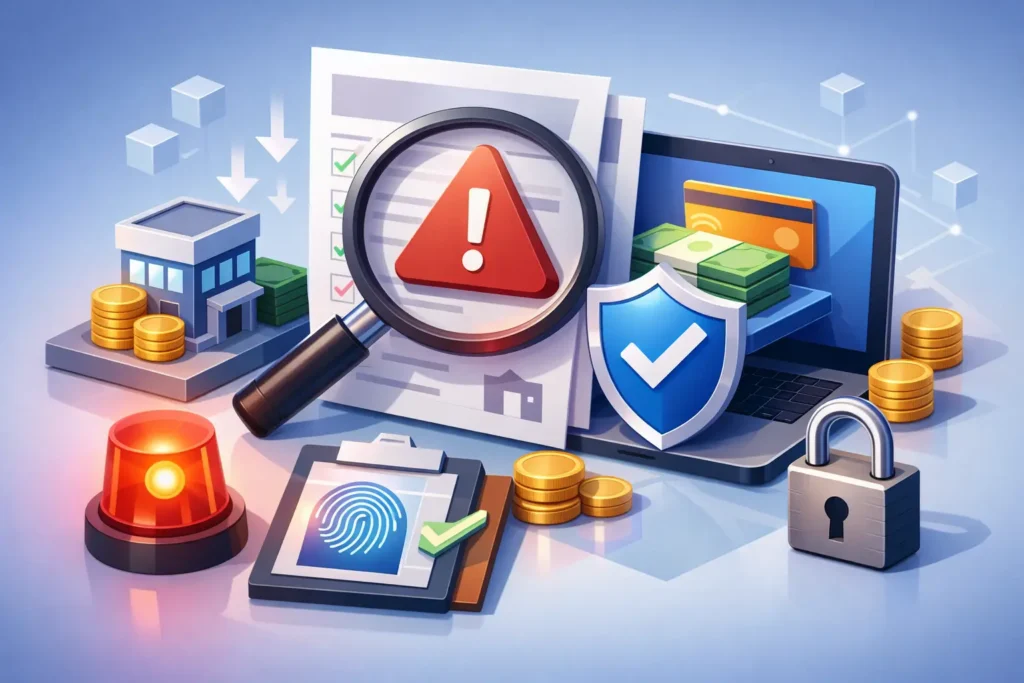
A payment request can look routine right up to the moment money leaves the account. A familiar vendor name, a copied logo, and an email requesting updated banking details are often enough to bypass an overworked approval queue. Effective fraud checks for vendor payments must start before the invoice is approved, not after the funds are gone.
For accounts payable teams, vendor onboarding staff, tax compliance directors, and BSA or AML professionals, the objective is clear: confirm that the business exists, the tax identity is valid, the payment details belong to the right party, and the transaction fits the established relationship. Speed matters, but speed without validation turns AP into an easy target.
Why Vendor Payment Fraud Gets Past Basic Controls
Most payment fraud is not a dramatic system breach. It is a process failure. A fraudster impersonates an existing supplier, creates a vendor that resembles a legitimate business, submits a duplicate invoice, or persuades an employee to change remittance instructions. Each tactic takes advantage of fragmented records and assumptions that prior approval means current safety.
A vendor master file can contain stale addresses, old bank accounts, duplicate records, and incomplete W-9 information. If the AP team cannot reliably tie a vendor name to its EIN or TIN, legal business name, address, and authorized payment information, it has little basis for deciding whether a request is legitimate.
The financial loss is only part of the exposure. Incorrect vendor records can also create 1099 reporting errors, IRS B-Notices, unresolved exception work, delayed vendor payments, and audit findings. In regulated environments, weak vendor controls can raise broader questions about identity verification and transaction monitoring.
Fraud Checks for Vendor Payments Begin at Onboarding
The most cost-effective time to stop vendor fraud is before a vendor enters the payment system. Once a questionable record is active, it can be copied into procurement, ERP, tax reporting, and banking workflows. Removing it later requires reconciliation across every connected system.
A disciplined onboarding process verifies the vendor’s legal name against the EIN or TIN provided on its W-9. This is not merely a tax filing task. A mismatch can signal a transposed number, an outdated trade name, an incomplete form, or an attempt to use another business’s identity. Each outcome needs resolution before payment activity begins.
IRS TIN matching is especially useful when a business must confirm whether the name and TIN combination is valid for reporting. It supports cleaner 1099 workflows and reduces the likelihood of B-Notices. However, TIN matching is one control, not a complete fraud decision. A valid TIN does not prove that the person requesting payment is authorized to speak for the vendor or that the bank account supplied is the vendor’s account.
For higher-risk vendors, verify more than tax data. Compare submitted details with trusted business records, review the business address and contact history, and establish a known communication channel with the vendor. The level of review should reflect the payment amount, the type of service, the vendor’s location, and the sensitivity of the relationship.
Separate Identity Validation From Bank Change Approval
Bank-account change requests deserve their own workflow. They are among the most common paths to payment diversion because the attacker does not need to create a new vendor. They only need to redirect one payment from a trusted vendor.
Never approve changed payment instructions solely from an inbound email, even if the sender’s display name looks correct. Require independent confirmation through a verified phone number or established portal contact. The employee making the confirmation should use contact information already on file, not the number or link in the change request.
Segregation of duties matters here. The person who enters vendor banking changes should not be the only person who approves them. A second reviewer should compare the request against the vendor record, document the verification call or confirmation, and ensure the change is subject to a hold period when the risk warrants it.
A hold period can be inconvenient for legitimate vendors that need urgent changes. That trade-off is real. But for large payments, first payments to a new account, or requests that arrive near a payment deadline, the cost of a short delay is generally far lower than the cost of an irreversible wire transfer.
Match Invoice Controls to the Fraud You Actually Face
Invoice review should look for consistency, not just arithmetic accuracy. A valid-looking invoice can still be fraudulent if the vendor identity, purchase authorization, goods receipt, or bank destination does not line up.
Three-way matching remains useful for businesses purchasing goods: compare the purchase order, receiving record, and invoice before release. Service businesses may need a different evidence trail, such as an approved statement of work, service confirmation, engagement owner approval, and rate validation. The right control depends on how the organization buys.
AP teams should also watch for duplicate invoice numbers, slightly altered invoice numbers, repeat charges, unusual frequency, unexpected rush language, and invoices just below approval thresholds. These are not automatic proof of fraud. They are exception signals that should trigger review.
Vendor records should be screened for duplicates using more than the vendor name. Compare tax ID, address, phone number, bank account, email domain, and common ownership indicators where available. Fraudsters often create a near-match vendor record so that a payment appears to go to an established supplier while actually routing to a different destination.
Build a Fast, Defensible Verification Workflow
Manual searches and email threads do not scale when a team onboards hundreds or thousands of vendors. They also make it difficult to show an auditor what was checked, when it was checked, and who approved the exception. The goal is a workflow that produces a clear verification record without slowing legitimate business.
Start by defining the minimum information required before a vendor can be activated: legal name, TIN or EIN, W-9, business address, authorized contact, payment method, and supporting procurement documentation. Missing fields should not be treated as harmless placeholders. They should block activation or route the record to an exception queue.
Then apply verification at the appropriate volume. A one-off contractor can be checked in real time before onboarding. A large vendor file may require bulk TIN matching before it enters the ERP. API-based checks are better suited to organizations that need validation during account creation, merchant onboarding, or automated vendor maintenance.
EINSearch.io supports this operational model with instant EIN lookup, IRS TIN matching, and batch or API-based verification for teams that need faster identity checks at scale. Fast access is valuable when approval decisions happen in seconds, but the verification result should still be captured in the vendor record and paired with human review for high-risk exceptions.
Use Risk Tiers Instead of Treating Every Vendor the Same
A local contractor receiving occasional low-dollar ACH payments should not require the same review as a new overseas supplier receiving a six-figure wire. A tiered process lets AP protect the organization without burying staff in unnecessary work.
Low-risk vendors may receive standard name-and-TIN validation, duplicate screening, and normal approval. Medium-risk vendors can require independent contact confirmation and added documentation. High-risk vendors, including those with new bank details, unusual ownership structures, urgent wire requests, or significant payment amounts, should receive enhanced review and approval from finance or compliance leadership.
Risk tiers should also change over time. An established vendor that suddenly changes bank accounts, begins submitting invoices from a new domain, or requests payments to a different entity is no longer operating as a routine vendor. The event should elevate the transaction for review.
Make Exceptions Visible Before They Become Losses
The strongest controls fail when exceptions disappear into inboxes. Create a clear queue for name-TIN mismatches, incomplete W-9s, duplicate vendors, bank changes, and unusual invoices. Assign an owner, require a documented disposition, and prevent payment release until the exception is resolved or formally approved.
Track the reasons exceptions occur. A recurring mismatch from one department may point to poor onboarding habits. Repeated bank changes from a vendor may be legitimate, but they may also justify a conversation about secure vendor communication. Patterns turn individual payment reviews into useful fraud intelligence.
Train employees on the specific tactics they will see: spoofed vendor domains, urgent executive requests, changes sent near payment cutoffs, and calls that pressure staff to bypass normal controls. The training should give them permission to pause a payment. A delayed legitimate payment can be explained. A diverted payment often cannot be recovered.
The practical standard is simple: no vendor should be paid because the request looks familiar. Pay only when the vendor identity, tax information, authorization, invoice evidence, and payment destination make sense together. That discipline protects cash, supports cleaner 1099 reporting, and gives AP the confidence to move quickly when the facts are verified.